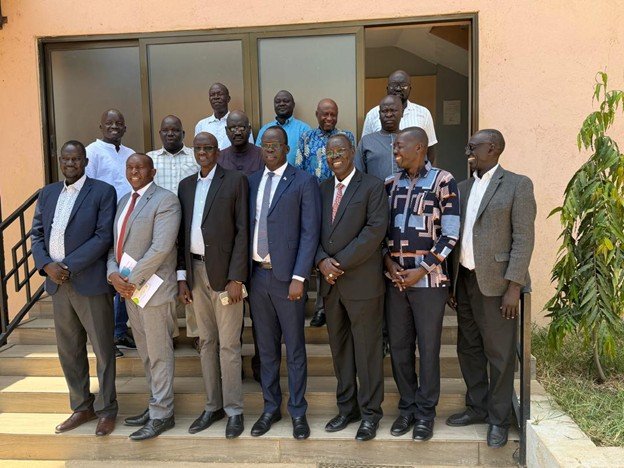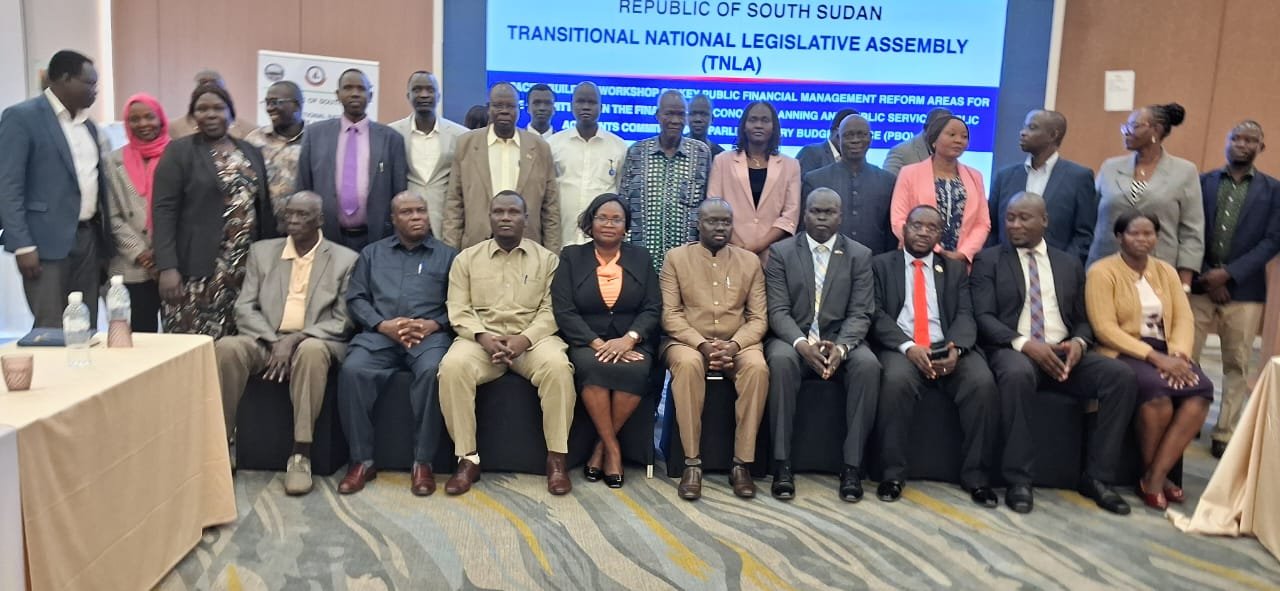
At the conclusion of the Capacity Building Workshop on Key Public Financial Management Reform Areas, Members of the Transitional National Legislative Assembly assembled for a group photograph, marking the end of a comprehensive engagement aimed at strengthening their role in governance, oversight, and public accountability.
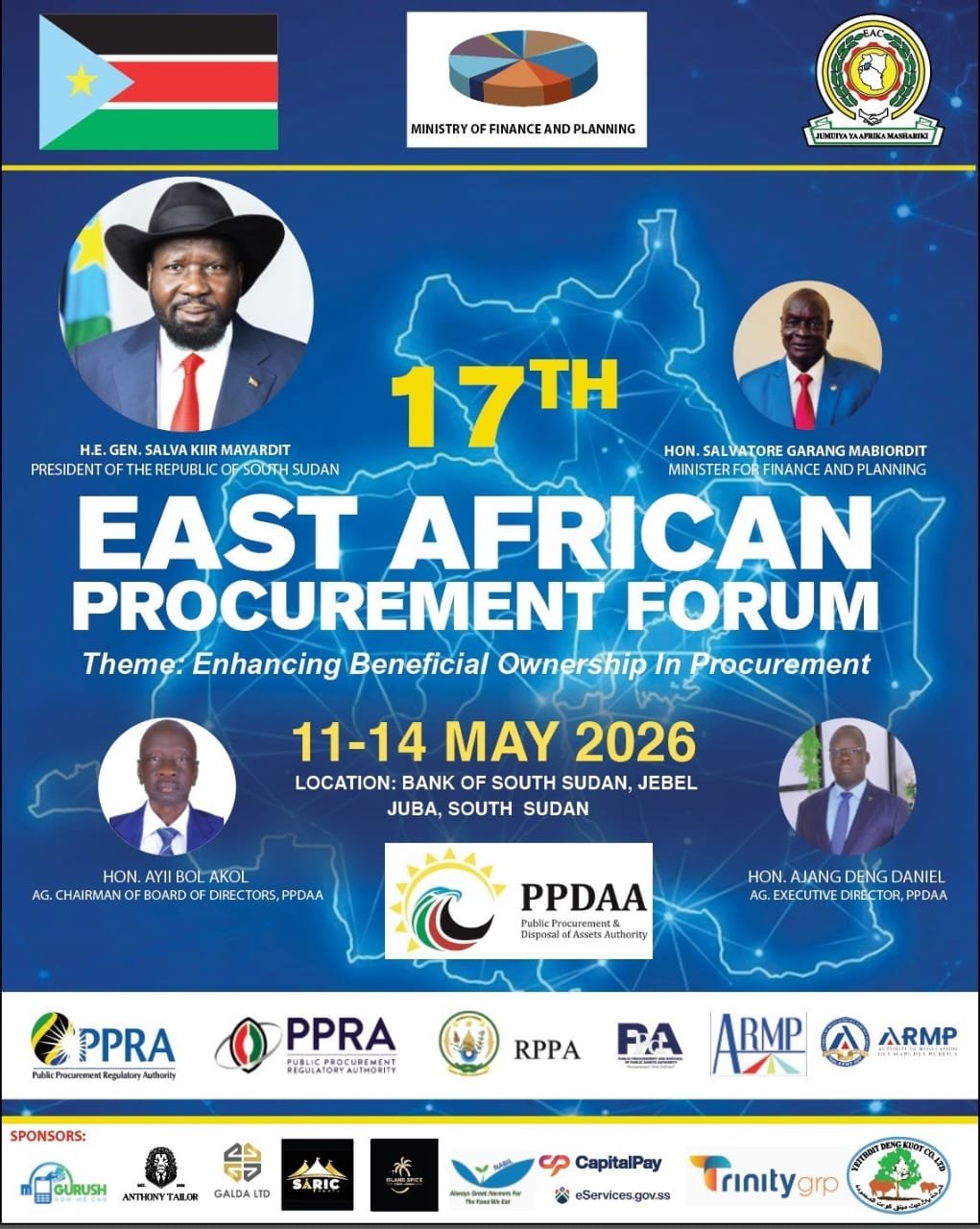
While the workshop covered a broad range of public financial management reforms, particular attention was drawn to the presentation delivered by Hon. Ajang Deng Daniel, which focused on the Public Procurement and Disposal of Assets System in South Sudan.
In his presentation, Hon. Ajang underscored the central role of public procurement as the mechanism through which government policies and budgets are translated into tangible services and infrastructure for citizens. He emphasized that without a strong and functional procurement system, public resources risk failing to deliver intended outcomes.
A key message that resonated strongly with participants was illustrated through the analogy:
“There is no way you can pour water into a basket and expect to fill it.”
This analogy highlighted the fundamental importance of having robust legal frameworks, effective institutional arrangements, and disciplined processes to ensure that public funds are utilized efficiently and with integrity.
The presentation outlined the foundational pillars of the procurement system, including: A clear and enforceable legal framework to guide all procurement activities; A structured procurement cycle linking planning, execution, and delivery; Strong governance and control mechanisms to safeguard integrity; and Comprehensive oversight structures, both internal and external
Particular emphasis was placed on the role of Parliament in ensuring that these systems function effectively. Members were reminded that oversight is not optional, but a statutory obligation, and that Parliament plays a critical role in safeguarding public resources through scrutiny of procurement performance.
Through instruments such as the Annual Performance Evaluation Report (APER), the Transitional National Legislative Assembly is empowered to assess compliance, identify systemic weaknesses, and demand corrective actions from procuring entities.
As Members gathered for the group photograph, the moment symbolized more than the conclusion of a workshop. It reflected a shared understanding of their responsibility to ensure that public procurement systems deliver value for money, uphold transparency, and maintain public trust.
The photograph therefore captures not only the participants of the workshop, but also a collective commitment by the Transitional National Legislative Assembly to strengthen oversight and ensure that public financial management systems contribute effectively to national development.
Share This